The Reality Distortion Field
Steve Jobs possessed what colleagues termed a 'reality distortion field'—an uncanny ability to convince people something was possible, even when it seemed utterly insane. This wasn't mere charisma; it was psychological manipulation weaponised for business success.
Former Apple employees describe a culture of fear under Jobs's leadership. He would publicly humiliate colleagues in meetings, dismissing their work as 'shit' in front of their peers. Yet these same employees also speak of being inspired to achieve the impossible. Jobs was a walking paradox: capable of tearing someone apart until they questioned their worth, then convincing them to reach heights they never thought possible.
This duality defined his entire career. Jobs wasn't celebrated for being kind or collaborative—he was celebrated for results. And those results came at a cost that most leaders wouldn't dare pay.
Beyond the Garage Myth
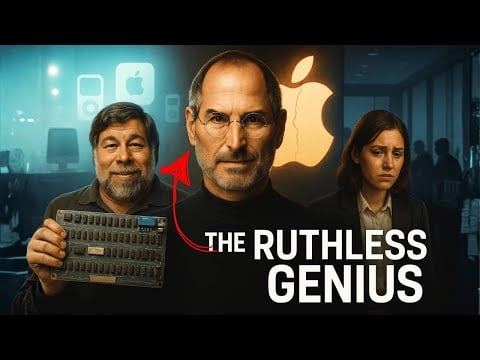
The story of two young entrepreneurs building Apple in a garage omits crucial details about Jobs's hunger for control from day one. While Steve Wozniak possessed the technical brilliance, creating the Apple I computer, Jobs understood something his co-founder didn't: brilliant technology means nothing without brilliant marketing.
Even in those early days, Jobs pushed Wozniak to commercialise ideas that Woz simply wanted to share freely with the computer hobbyist community. Jobs wasn't the superior engineer—that was Wozniak's domain. But he was the relentless businessman, willing to fight, manipulate, and demand perfection to transform innovation into profit.
This pattern would define his entire career. The computer mouse was invented by Xerox. The graphical user interface? Also Xerox. Jobs's genius wasn't invention—it was execution and presentation. He took other people's innovations and made them irresistible to consumers.
The Fall From Grace
By the mid-1980s, Jobs had transformed Apple into a rising tech giant, but his personality became the company's greatest liability. His obsession with perfection meant products were constantly delayed. His inability to compromise created internal warfare. His ruthless leadership style drove away talented employees.
The breaking point came with the Lisa computer—ironically named after the daughter he refused to acknowledge. The project was over budget, behind schedule, and commercially unsuccessful. When the board of directors faced a choice between survival and Steve Jobs's chaos, they chose survival.
The unthinkable happened: Steve Jobs was fired from Apple, the company he co-founded. The humiliation was public and complete. Most people would have disappeared, perhaps written a memoir, faded into obscurity. Steve Jobs didn't.
The Exile Years: Strategic Reinvention
Instead of retreating, Jobs doubled down on his vision. He launched NeXT Computer, developing technologies that would later power Mac OS X. More significantly, he acquired a small animation studio from George Lucas for $10 million. That studio was Pixar.
At Pixar, Jobs revealed another dimension of his genius: storytelling. He didn't merely want to create animated films; he wanted to revolutionise how stories were told. Under his leadership, Pixar produced 'Toy Story,' the first fully computer-animated feature film.
But Jobs remained just as ruthless at Pixar as he had been at Apple. He fired directors mid-production, demanded endless rewrites, and pushed animators to nervous breakdowns. The difference was strategic: at Pixar, his perfectionism produced masterpieces. He had learned to channel his ruthlessness more effectively.
The Triumphant Return
When Apple teetered on the brink of bankruptcy in 1997, they needed a miracle. That miracle came in the form of the man they'd expelled twelve years earlier. Apple acquired NeXT, bringing Steve Jobs back as interim CEO.
This time, his ruthlessness became Apple's superpower. He eliminated 70% of Apple's product line without mercy—no focus groups, no market research, just brutal decisiveness. He clashed with employees until products reached his impossible standards. He imposed his vision on the company, regardless of popular opinion.
The result was the iMac: a computer that resembled candy rather than a beige box. It achieved ridiculous success, but more importantly, it signalled that Apple was back. Jobs had learned something during his exile—his ruthlessness was only powerful when combined with impeccable taste and perfect timing.
Revolutionary Products, Human Cost
Then came the devices that changed everything. The iPod didn't simply play music; it made carrying 1,000 songs feel magical. The iPhone didn't just make calls; it put the internet in your pocket. The iPad didn't merely display content; it made computers feel as natural as books.
Each device wasn't just a product—it was a cultural shift. But behind every sleek design and polished marketing presentation was a man who still didn't care about being liked. Jobs cared about winning. He demanded loyalty, excellence, and total devotion to his vision.
The numbers don't lie: under Jobs's leadership, Apple became the world's most valuable company. But the human cost was enormous. Employees suffered nervous breakdowns. His relationship with his daughter remained strained for years. Even his own health suffered as he attempted to control his cancer treatment with the same iron will he applied to everything else.
The Uncomfortable Legacy
Was Steve Jobs a good person? The evidence suggests not. He denied his daughter for years, publicly humiliated employees, carried grudges, and destroyed careers. But was he a great businessman? The evidence is overwhelming: his uncompromising vision and ruthless leadership transformed Apple from a near-bankrupt company into a trillion-dollar empire.
After Jobs's death, Apple became more employee-friendly under Tim Cook's leadership. But it also became less innovative. The company is more profitable than ever, yet it hasn't created a truly revolutionary product since Jobs's passing.
Perhaps this reveals the uncomfortable lesson: revolutionary success sometimes requires revolutionary ruthlessness. Jobs was willing to sacrifice relationships, kindness, and ultimately his own health for his vision. He paid the ultimate price, and so did everyone around him.
The question isn't whether we should admire Steve Jobs. The question is whether we can learn from his success without becoming monsters ourselves. Jobs proved that ruthlessness can deliver incredible results—but he also demonstrated that success without humanity might not be worth the cost.
Watch the documentary
The Uncomfortable Truth About Steve Jobs: How Ruthlessness Built Apple's Empire
Share
Know someone who'd find this useful? Send it their way.