The TikTokAlgorithmDecoded
How TikTok's interest graph conquered the social graph and changed everything.
Opening
TikTok's algorithm is the most brutal truth-teller in social media history. Not because it's magic. Because it doesn't lie to you about what humans actually want to watch.
Every other platform feeds you polite fiction. Instagram pretends you care about your old school friends' lunch photos. Facebook assumes family updates matter more than genuinely interesting content. LinkedIn thinks your colleague's corporate humblebrags deserve your attention. Twitter believes your carefully curated follow list reflects your real interests.
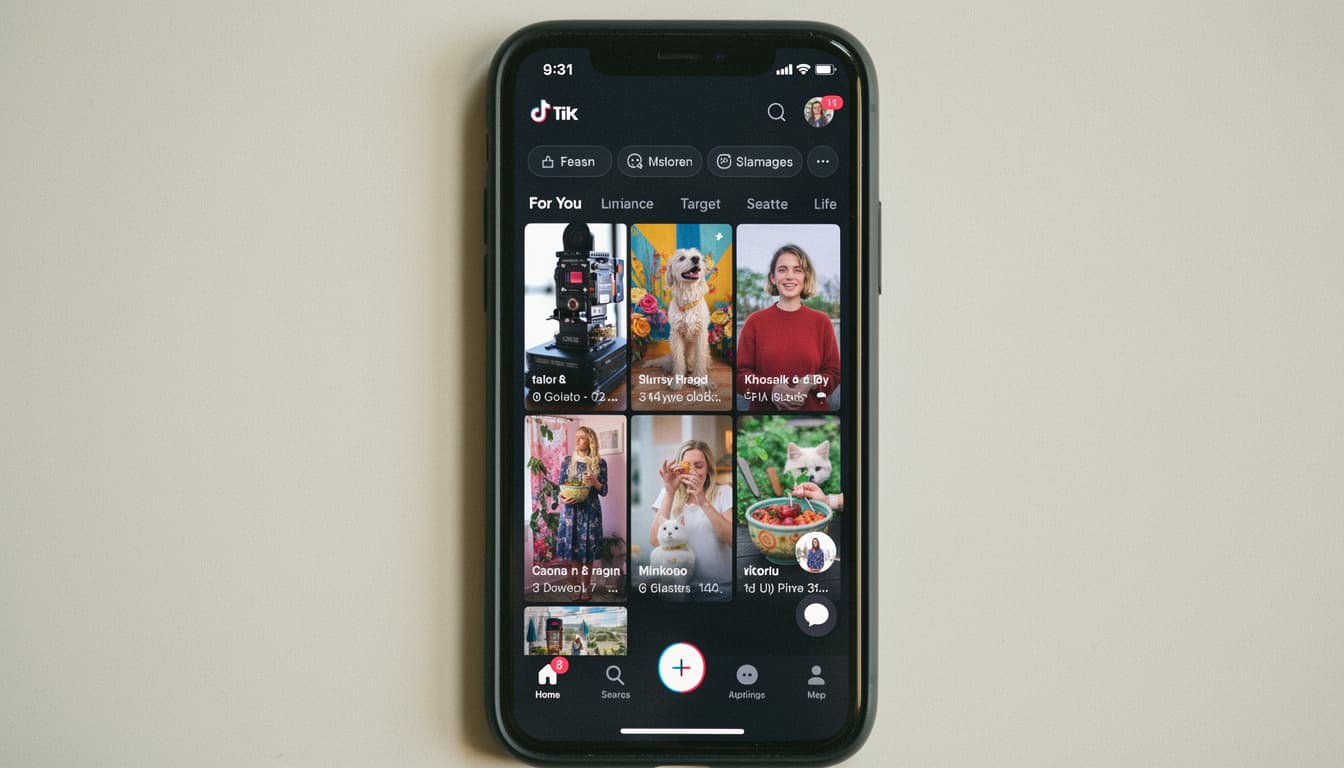
TikTok stripped away all that social theatre. It asks one question: will this video make you put your phone down or keep scrolling? Your answer teaches it everything it needs to know about who you are.
This shift from the social graph to the interest graph changed everything. The social graph says show me what my friends are doing. The interest graph says show me what I actually want to see, even if it comes from a teenager in Manila making slime videos. One approach is socially acceptable. The other is honest.
TikTok stripped away all that social theatre and asks one question: will this video make you put your phone down?
The Machine Learns Fast
The mechanics are beautifully simple. TikTok shows you videos from complete strangers. You watch or you skip. No grey area. No complicated engagement metrics. The algorithm counts seconds, not likes.
Every video gets a trial run with a small audience. If people watch it fully, replay it, share it, the pool expands. If the skip rate stays low, the expansion becomes exponential. A video can jump from 100 views to 100 million views in six hours, regardless of who made it.
This breaks every rule of traditional social media. On Instagram, new accounts with zero followers are invisible. You could create the most brilliant content ever made, but without existing distribution, nobody sees it. TikTok's algorithm doesn't care about your follower count. It cares whether humans choose to watch your stuff.
The genius is alignment. Creators want eyeballs. The algorithm wants content that holds eyeballs. No compromise. No politics. Just pure performance.
Humans prefer good content from strangers over mediocre content from friends.
TikTok stripped away all that social theatre and asks one question: will this video make you put your phone down?
Your Real Interest Profile
Here's what TikTok figured out: humans are weird collections of contradictory interests. You might love professional cooking videos and conspiracy theories about birds. You might be obsessed with minimalist home design and chaotic gaming commentary. Your actual interest stack is a bizarre mix that no demographic profile could predict.
The social graph forces you into a single identity. Your Instagram presents one version of yourself. LinkedIn presents another. TikTok ignores your profile entirely. It watches what you actually consume when nobody's looking.
This created something unprecedented: genuine content discovery. Suddenly, the most interesting videos weren't trapped behind social connections. A 16-year-old explaining quantum physics could reach physics professors. A grandmother's cooking tips could find food enthusiasts worldwide. The algorithm became the great equaliser.
The feedback loop is ruthless. Within minutes of upload, TikTok knows if your video works. Within hours, it knows if you've found your niche. Either people watch or they don't. You'll know by tomorrow.
You can't coast on past success because every upload is a fresh audition.
Humans prefer good content from strangers over mediocre content from friends.
The New Creator Economics
This algorithmic honesty destroyed traditional creator economics. On Instagram, 100,000 followers meant guaranteed monetisation, even if engagement was dying. Follower count was the asset. On TikTok, followers are nearly meaningless. Your next video's performance is everything.
This forced creators to actually stay good. You can't coast on past success. Every upload is a fresh audition. This created genuine meritocracy in a space that had become all about social capital.
The Creator Fund became possible because TikTok could predict, with extraordinary accuracy, which videos would get watched. Payouts weren't based on follower count or channel history. They were based on pure performance. A complete newcomer could out-earn established creators on a single viral video.
None of this works on the social graph. Social platforms require social capital first, then distribution follows. The interest graph reverses this completely. Content quality drives distribution. Distribution drives income. Social capital becomes irrelevant.
You can't coast on past success because every upload is a fresh audition.
The Great Platform Panic
Every major platform is now scrambling to copy TikTok's approach. Instagram launched Reels. YouTube created Shorts. Twitter experimented with algorithmic feeds. The reason is simple: the interest graph is more honest about human preferences. It's also more addictive.
When it works, the experience is seamless. You open the app intending to check something quickly. Three hours disappear. You've watched videos about topics you didn't know interested you, made by people you'd never heard of.
The social graph has natural limits. You can only distribute to existing connections. The interest graph is unlimited. Anyone can reach anyone if the content is compelling enough. This creates genuine meritocracy. It also means the algorithm controls everything.
TikTok's algorithm isn't artificial intelligence in some mystical sense. It's a recommendation system optimised for watch time. But the implications are revolutionary. It proved most of what people want to watch has nothing to do with who they know. It proved attention is the only metric that actually matters.
The Interest Graph Won
This victory isn't temporary. It's structural. Humans prefer good content from strangers over mediocre content from friends. Every platform that learns this survives. Every platform clinging to the social graph becomes irrelevant.
For creators, this means you're no longer trapped building followers before building an audience. You can grow one video at a time. For viewers, it means the most interesting content is no longer locked behind social connections. For platforms, it means recommendation systems aren't a feature anymore.
They're the entire product.
TikTok didn't invent the interest graph, but it was the first to optimise it completely. In doing so, it killed the old creator economy and built a new one on a single principle: make something people want to watch, or don't bother making anything at all.
End of file
The next one drops Sunday at 7am.
One long-form story a week, plus the tools, frameworks and tactics I’m using to run my own media business. Written from the operator’s seat — not the consultant’s.
No threads. No spam. Reply anytime — I read every one.